Build a Library That Fits the Way You Read
A growing book collection deserves better than crowded stacks, generic furniture, or shelves that slowly sag under favorite hardcovers. Choosing between bookcases and floating shelves for books shapes how your library looks, how much it holds, and how well it works for daily reading.
Bookcases bring familiar enclosed storage, while floating shelves can turn an empty wall, narrow nook, or reading corner into something more architectural. The best fit depends on your collection size, room layout, book weight, and the feeling you want in the room. Late August is a natural time to rethink storage before fall reading season, back-to-school routines, and more cozy hours indoors.
At The Mortise & The Hare, we solve limited library-space problems with made-to-order solid hardwood floating shelves built around concealed Hovr® brackets. With custom dimensions available, sustainably sourced FAS-graded hardwoods, and up to 300lbs capacity when properly installed, we help you plan a library with confidence. First-time visitors can also receive $25 off by signing up.
Bookcases Bring Storage and Traditional Presence
Bookcases work well when your collection needs volume and visual containment. A freestanding unit can hold books while giving documents, electronics, and everyday clutter a place to disappear behind cabinet doors or inside drawers. They are also a practical choice for renters who may need to take their library with them.
Still, standard bookcases ask for floor space. In a narrow room, hallway, or small office, that footprint can make seating and movement feel tight. Fixed widths and depths also rarely cooperate with awkward alcoves, stair landings, or slim wall sections. Long spans on low-cost furniture may bow when loaded with dense hardcovers.
We usually recommend a bookcase when you need:
- Hidden storage for more than books
- Furniture that can move with you
- A traditional, freestanding library look
- Storage in a room where wall mounting is not possible
Even a bookcase-focused room can benefit from a few wall-mounted display shelves above a desk, reading bench, or low cabinet. While bookcases store volume, floating shelves recover floor area and make the library feel more tailored. Our "Feel before you buy" sample option lets you compare hardwood grain, color, and finish where the shelves will live.
Floating Shelves Create More Room for Reading
Floating shelves for books keep the floor open for a reading chair, baskets, desk, or lamp because the storage lives on the wall. We often see them work beautifully in apartments, children's rooms, compact offices, hallways, and the overlooked space around doors and windows.
Their layout can be as quiet or expressive as you like. Run shelves in even rows for a classic library wall, stack them from low to high for a built-in feel, or stagger them with framed art and meaningful objects. Solid hardwood brings warmth and permanence that laminate shelving often lacks.
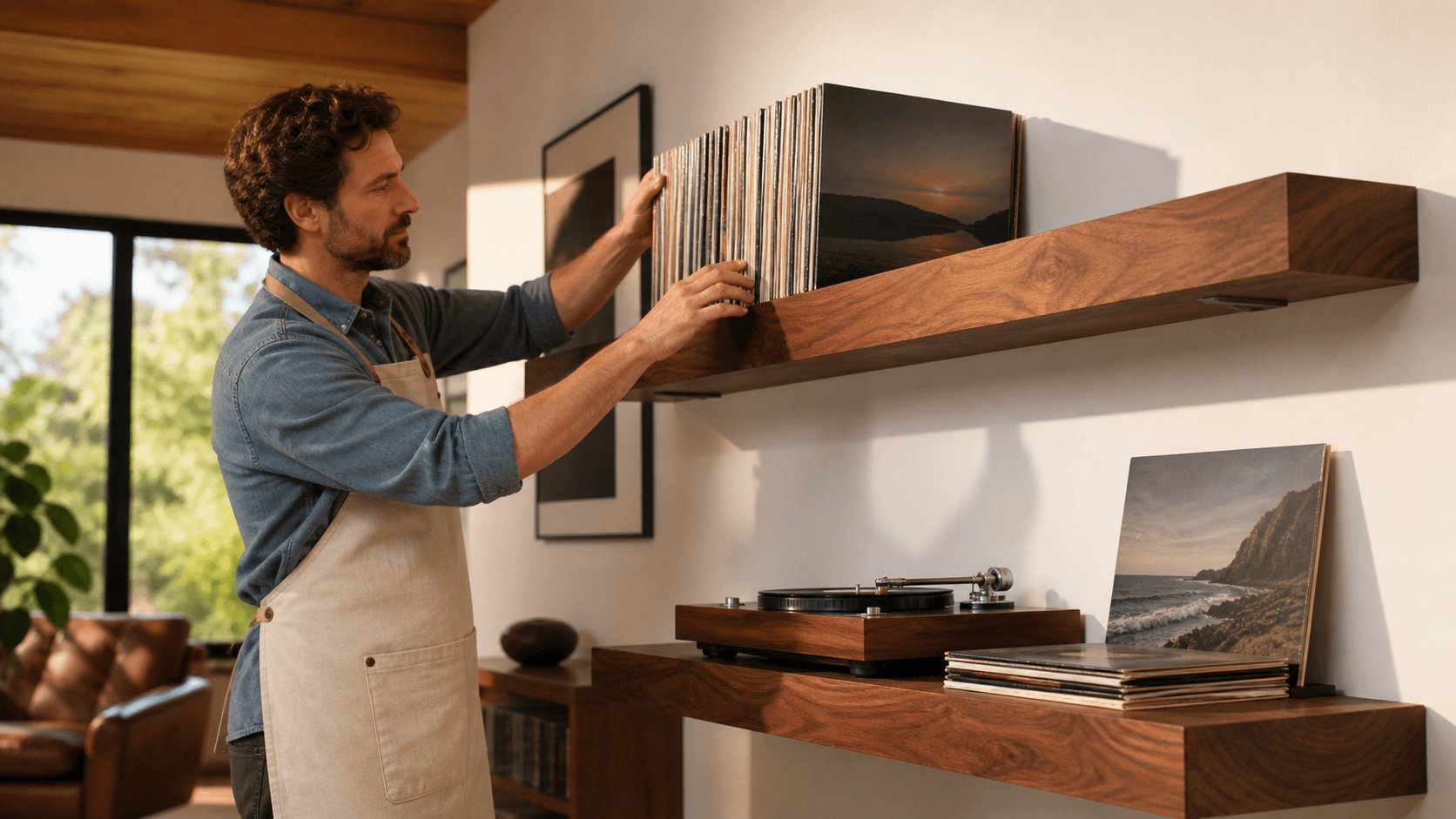
Heavy books are the big question, and rightly so. At The Mortise & The Hare, we address that concern with concealed Hovr® brackets engineered for up to 300lbs capacity when properly installed. All our shelves include detailed installation guides, helping you build confidently around hardcovers, cookbooks, art books, and collectible editions. For a rich, classic library look, consider walnut floating shelves, made to order from FAS-graded hardwood, with custom dimensions available for a close, intentional fit.
Compare Weight, Space, and Long-Term Flexibility
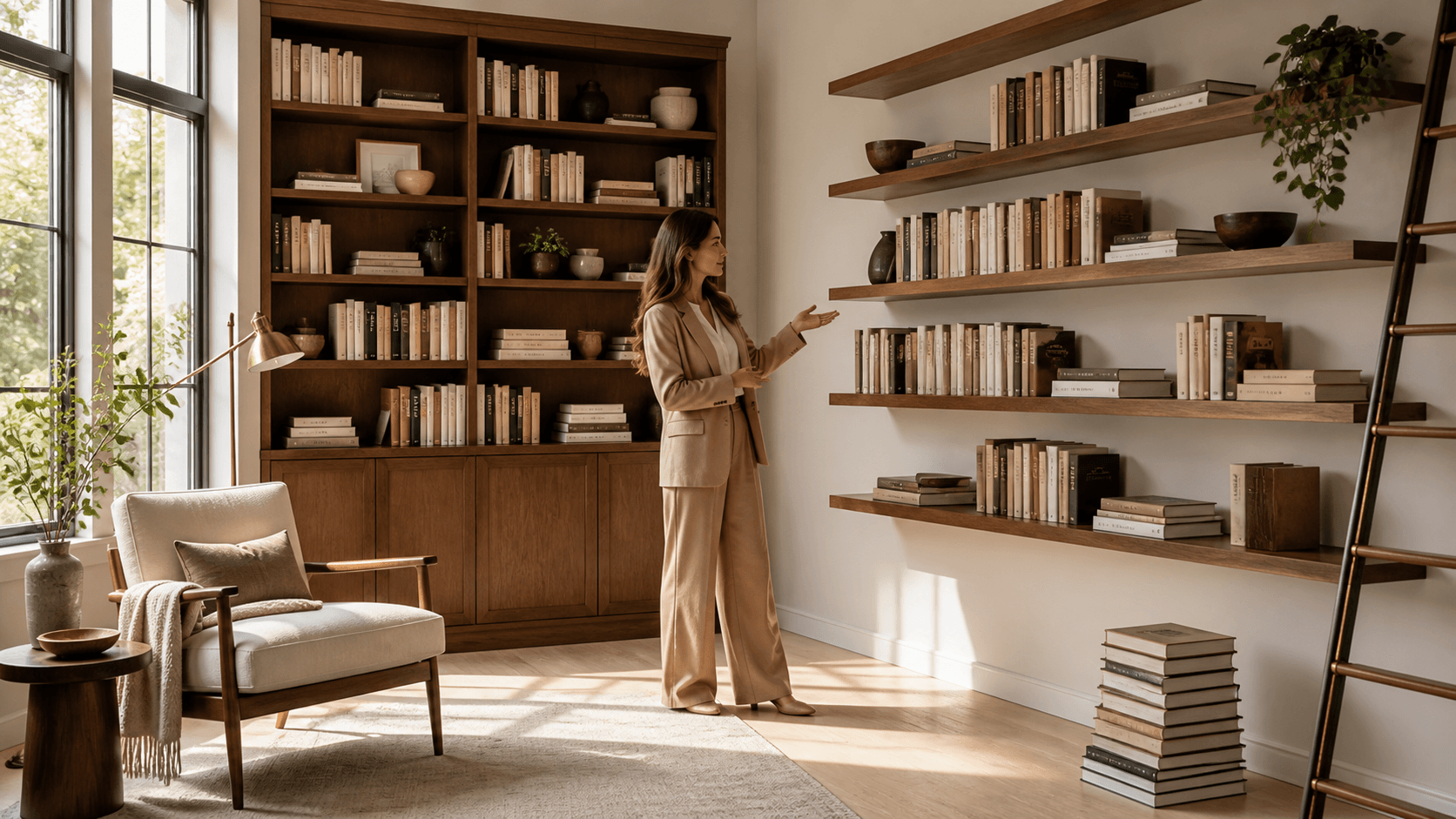
The decision becomes clearer once you look at how you use the room. Bookcases are often the better answer for enclosed storage and mobility. Floating shelves are often stronger for saving floor space, fitting an exact wall dimension, and creating a built-in appearance without full cabinetry.
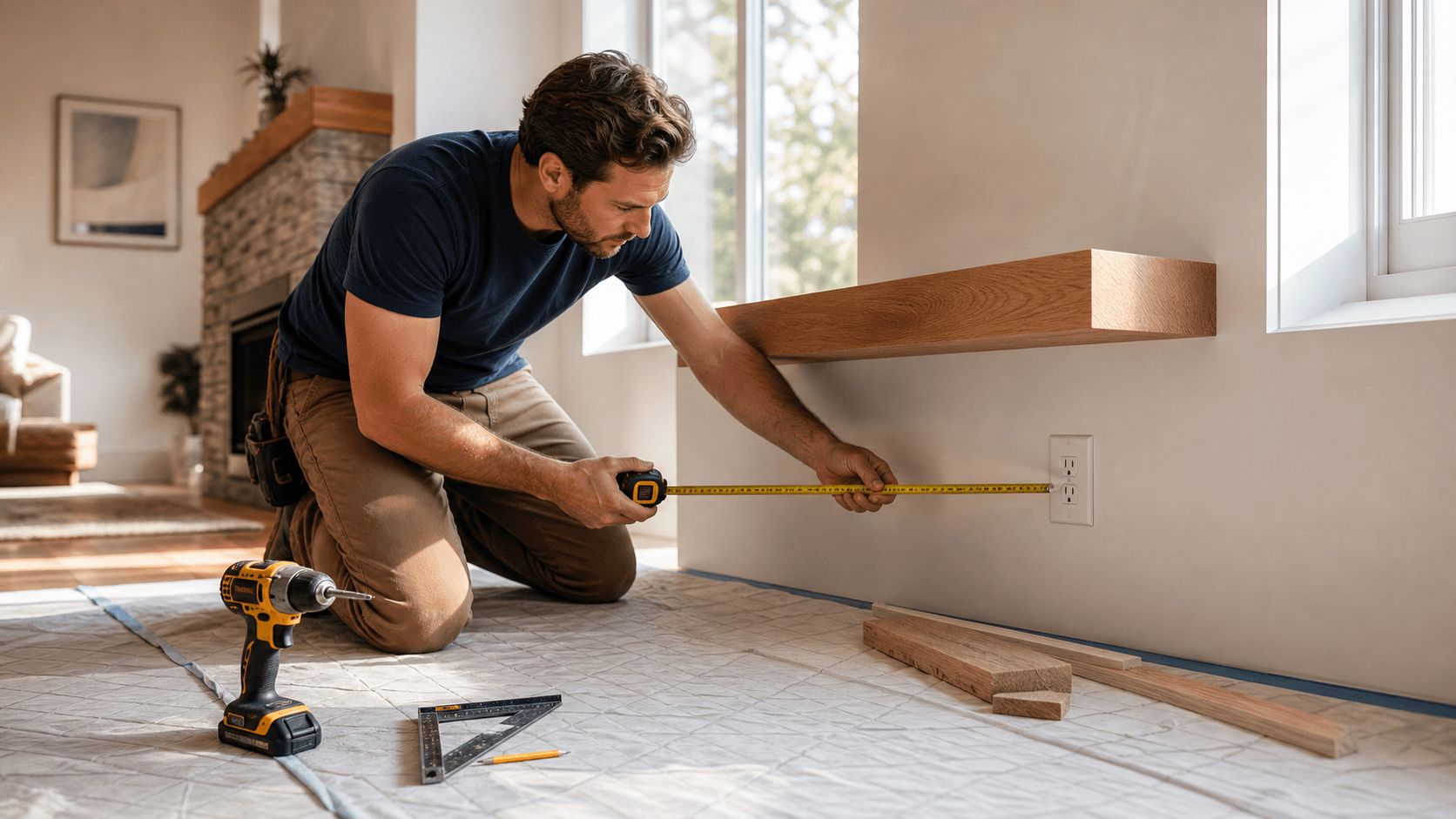
Before choosing, measure the usable wall area, the depth of your largest books, and the shelf length you need. Paperbacks can work on shallower shelves, while textbooks, reference books, oversized art books, and cookbooks need more room and stronger support. Capacity is not only about the wood. Mounting hardware, wall conditions, shelf span, and proper installation all matter.
Instead of forcing your library around standard furniture sizes, we can make shelves for the space you actually have. Our custom sizing options are especially helpful for unusual wall layouts, extra-deep shelves, and larger home libraries. For custom quotes or projects, see our custom sizing options. Bright, modern rooms may call for white oak floating shelves, whose clean grain pairs naturally with contemporary, coastal, and Scandinavian-inspired interiors. Like all our hardwood options, they are sustainably sourced and FAS-graded for a long-lasting library investment.
Choose a Shelf Style That Matches Your Library
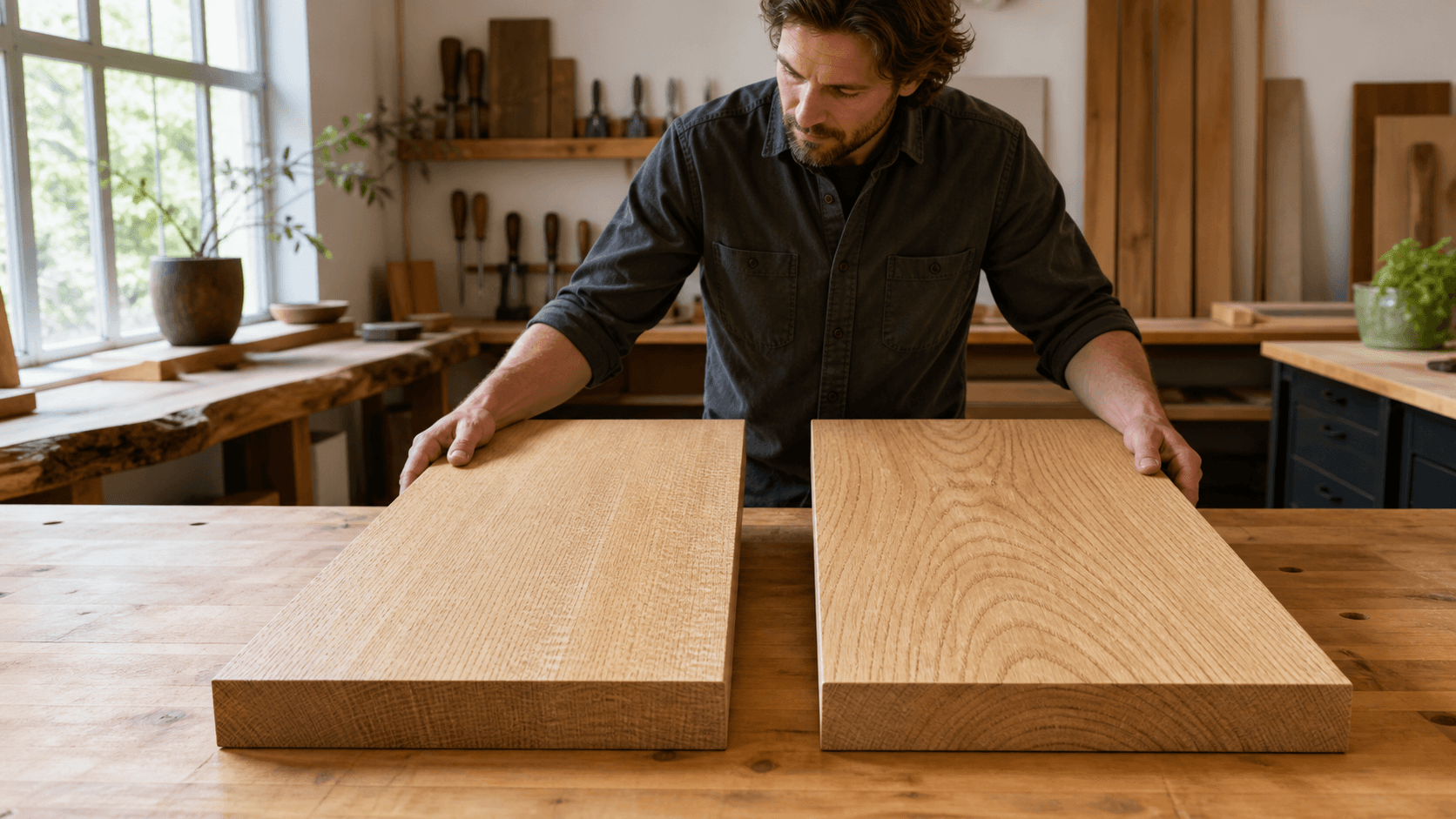
Wood species can set the mood before you place a single book. Walnut suits moody studies, traditional rooms, and spaces with dark accents. White oak feels lighter and cleaner. We recommend viewing samples in both natural and artificial light, since the room can change how the grain and finish appear.
Live edge shelving works best when you want one shelf to feel like a feature, such as a curated row above a reading chair or a small collection in a den. For a uniform floor-to-ceiling library, straight edges usually create the calmer, repeatable lines most readers want. Gallery rail floating shelves add an elegant boundary for books and decorative objects, giving a display wall a more polished finish.
Every shelf we make is built to order from sustainably sourced FAS-graded hardwood and backed by our Level for Life guarantee. We also support designers, builders, and other professionals through our trade program for client libraries, hospitality spaces, and custom residential projects.
Start Building a Library That Lasts
Choose a bookcase when movable furniture and enclosed storage matter most. Choose floating shelves for books when you want open floor space, a custom fit, hardwood quality, and a built-in look. A carefully measured shelf plan makes a personal library feel intentional instead of improvised.
The strongest choice is the one that supports the books you own now while leaving room for the books you will bring home next. Consider the wall, the weight, the depth, and the reading life you want the room to support before settling on a final layout.
Built for the Weight of Your Growing Library
At The Mortise & The Hare, our made-to-order, FAS-graded hardwood floating shelves for books offer custom dimensions, up to 300 lbs of capacity, and our Level for Life guarantee. We source responsibly and include detailed installation guides so you can display a substantial collection with confidence. First-time visitors can also receive $25 off by signing up, and professionals are welcome to ask about our trade program. For a custom depth, length, or library arrangement, contact us for a tailored quote.