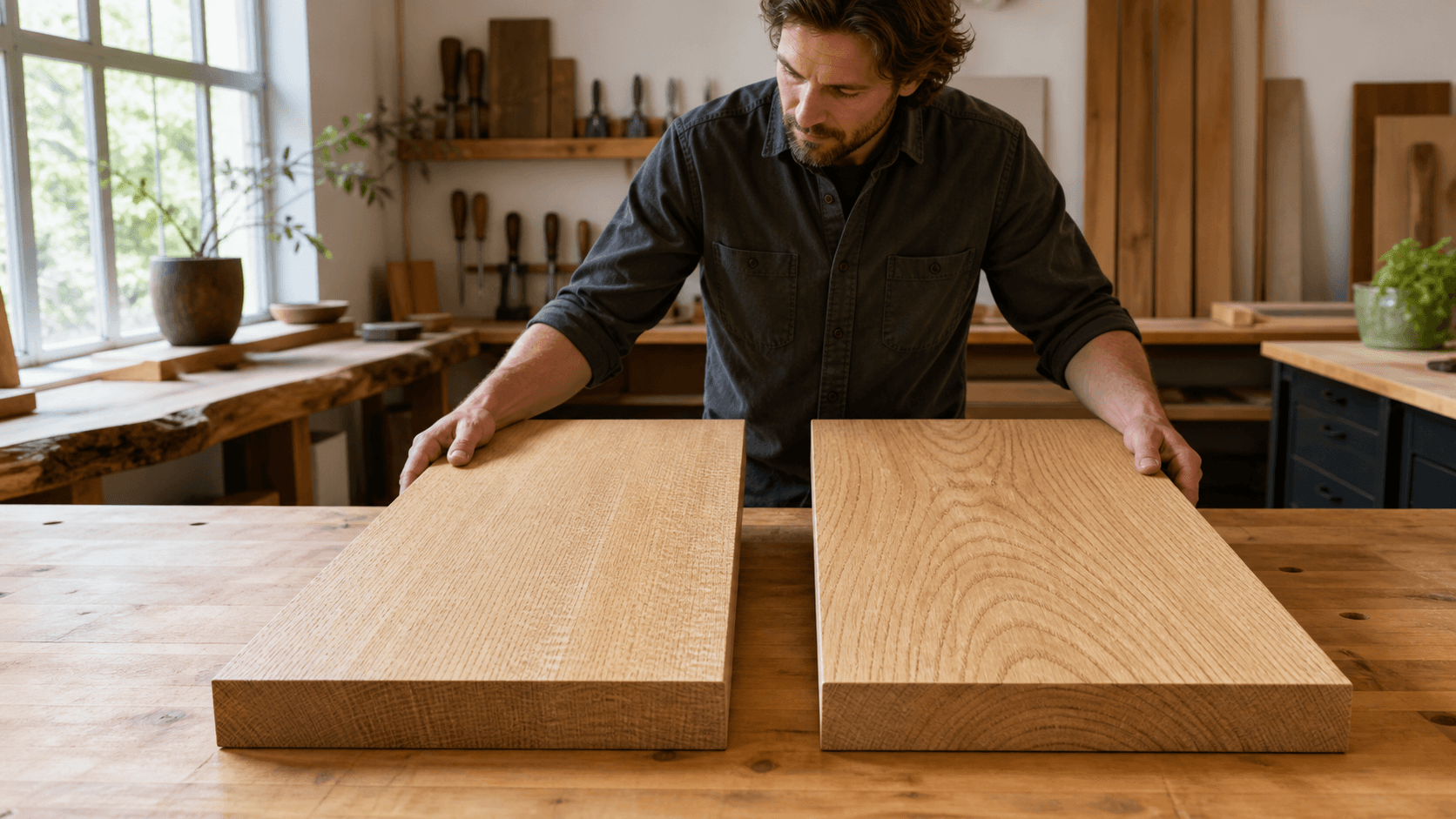
See Oak Grain Before You Commit to a Shelf Design
Choosing quarter-sawn oak shelves or plain-sawn oak changes more than a board's appearance. The grain affects how your shelf works with cabinetry, stone, paint, and the natural shifts that come with seasonal humidity.
October is when many of us start clearing space for fall hosting, holiday dishes, and extra serving pieces. A made-to-order shelf can make that space feel planned from the start, and grain direction is one of the most visible choices you will make. Quarter-sawn white oak has straighter grain and ray fleck, while plain-sawn oak shows flowing cathedral patterns and a softer, more traditional feel.
We build our shelves from sustainably sourced, FAS-graded hardwoods, with custom dimensions available for the wall and purpose you have in mind. Our concealed Hovr brackets are engineered for up to 300 lbs capacity when properly specified and installed. First-time visitors can also sign up for $25 off their first order.
Quarter-Sawn Oak Shelves Reveal a Tailored Look
Quarter-sawn oak shelves are cut so the grain runs in a more vertical, linear pattern across the face of the board. White oak often shows medullary ray fleck with this cut, a subtle shimmer that gives the wood its recognizable character without making it feel busy.
That tailored look works especially well when the room already has clean lines. We often recommend quarter-sawn oak for modern kitchens, Scandinavian-inspired rooms, Craftsman interiors, and walls near rift-cut or white oak cabinetry. On a long shelf, the steady grain helps the whole piece feel calm and connected.
Made to order means you can choose a depth and length that fit your wall instead of trying to make a standard size work. Browse our white oak floating shelves for refined grain, solid FAS-graded hardwood construction, and made-to-order sizing.
Plain-Sawn Oak Creates Warmer Movement and Value
Plain-sawn oak is cut to bring out wider, more dramatic cathedral grain patterns. The result feels warm, natural, and a little more expressive, which makes it a fitting choice for farmhouse, transitional, traditional, and eclectic spaces.
Every solid wood shelf has its own markings, but plain-sawn boards tend to put that variation front and center. Before choosing, look at the finishes around the shelf. A quiet painted wall can give cathedral grain room to shine, while bold stone veining, patterned tile, or a busy backsplash may pair better with the restraint of quarter-sawn oak.
For a darker and richer grain statement, walnut is another option worth considering. Our walnut floating shelves can create strong contrast above a white backsplash or beside pale oak cabinetry, with the same made-to-order quality and concealed-bracket strength.
Match Your Shelf Cut to Daily Demands
Grain cut matters for appearance and long-term movement, but it is only one part of a successful shelf plan. Thickness, depth, wall construction, bracket placement, and installation all matter when shelves will hold dinnerware, books, cookware, or everyday decor.
For heavier uses, we recommend planning around the actual items that will live on the shelf:
- Dinnerware and cookware need enough depth for safe, easy access.
- Stacked cookbooks benefit from a solid shelf and dependable wall support.
- Decorative pieces may allow for a shallower profile.
- Long spans should be planned with the wall and intended load in mind.
At The Mortise & The Hare, we solve this problem with solid hardwood floating shelves engineered for up to 300 lbs capacity when properly specified and installed. All our shelves include detailed installation guides, and our Level for Life guarantee adds reassurance for a permanent-looking installation. Measure carefully, identify stud locations, and leave enough room to use the shelf comfortably, not just style it beautifully.
Turn Your Grain Choice Into a Custom Shelf Plan
A simple rule can help narrow the decision. Choose quarter-sawn oak when you want consistent grain, Craftsman character, or a more contemporary feel. Choose plain-sawn oak when you want visible cathedral grain, more natural variation, and a warmer traditional look.
Once you pick the cut, the remaining details bring the shelf into focus:
- Length for the wall or feature area
- Depth based on what you plan to store
- Thickness for the visual weight you prefer
- Finish that works with nearby cabinetry and flooring
- Bracket placement suited to the wall and shelf use
Custom dimensions can make a narrow nook, long dining-room wall, or built-in-style arrangement feel intentional. Gallery rail floating shelves are also a smart fit for cookbooks, framed art, barware, and frequently used kitchen items that benefit from a subtle retaining edge. Designers, builders, architects, and installers planning multi-shelf projects can include trade-program needs when preparing a custom project quote. Feel before you buy: order wood samples before making a final selection.
Start Your White Oak Shelf Project with Confidence
Both oak cuts can be beautiful choices when they suit the room and the way you live in it. Quarter-sawn oak brings linear grain and ray fleck for a tailored look, while plain-sawn oak offers bold cathedral movement and a softer traditional feel.
The best shelf plan balances that visual choice with real daily demands. When grain, dimensions, shelf depth, wall conditions, and intended load all work together, solid hardwood shelving feels like a natural part of the room rather than an afterthought.
Made-to-Order Strength for Your Space
At The Mortise & The Hare, our quarter-sawn oak shelves are made from sustainable FAS-graded hardwoods, with custom dimensions available for a tailored fit. Built for up to 300 lbs when properly installed and backed by our Level for Life guarantee, they bring dependable performance to hardworking rooms. First-time visitors can receive $25 off by signing up, and professionals can ask about our trade program. For a custom size or project guidance, contact us for a quote.