Design Sightlines That Feel Effortless Every Day
A custom-depth wall shelf can make your kitchen feel calm and clean, or busy and heavy. The difference often comes down to just an inch or two. When shelves stick out too far, or stop at awkward spots around a window or hood, your eye catches every little mismatch instead of enjoying the whole room.
We see this a lot. Someone does a beautiful remodel, loves the counters and backsplash, but the upper cabinets or off-the-shelf floating shelves chop across the wall in strange places. The line around the window looks broken. The area around the range hood feels crowded. It just never looks quite "right."
When we build shelves, we do not start by guessing a number like 10 inches deep. We start with how your eye travels across the wall, how far your countertop projects, where your appliances sit, and how you move through the room. In this article, we will walk you through how we think as furniture makers so your custom-depth wall shelf feels like a built-in, not an afterthought.
How Depth Affects Sightlines, Space, and Daily Use
You will hear a lot about "standard" shelf depths, usually 8, 10, or 12 inches. Those can be helpful starting points, but they are not rules. Near a sink, range, or window, the right depth is more about proportion and comfort than hitting a standard.
Here is what depth changes in a real kitchen:
- How far the shelf projects into your walking path
- How much shadow it throws on the backsplash
- How it lines up with hoods, cabinets, and window trim
- How easy it is to reach what you keep there
Deeper shelves can feel bold and practical, but in a narrow walkway they begin to crowd you. They can compete with a tall range hood or make a slim window wall feel top-heavy. On the other side, a very shallow shelf might look spindly or not hold real dishes at all, so it becomes "decor only" even if you wanted storage.
Vertical stacking matters too. Depth interacts with height. If your shelves are deep and mounted low, the space between counter and shelf can feel tight, like the shelf is looming over your cutting board. With a calmer depth, you get a simple, clean band across the wall that is easy on the eyes and easy to use.
So the goal is balance. From across the room, you want visual quiet and straight, confident lines. At arm's length, you want easy reach, good head clearance, and enough space for the items you actually grab every day.
Choosing the Right Depth Zone for Each Kitchen Wall
We like to break the kitchen into zones instead of giving one answer for the whole room. Different walls have different jobs.
For prep and sink walls, leaner is usually better. Many counters have a slight overhang, and if the shelf sticks out beyond that, the whole wall can feel front-heavy. Here, a custom-depth wall shelf in the 8 to about 9 and a half inch range often works well. It can hold:
- Everyday glasses
- Short stacks of bowls
- Spices and oils in a neat row
- Small plants or a bit of art
The shelf reads as a quiet line that respects the counter below and does not fight the faucet or window casing.
On range walls, things get more technical. You need to think about the hood projection and clearances around heat. We usually like shelves that sit visually "behind" the front edge of the hood so the hood remains the star and steam can move freely. The right depth here keeps you from bumping your head while you stir, and it avoids trapping grease in a tight upper corner.
For coffee bars and small appliance zones, deeper makes more sense. Here, 10 to 12 inches is often ideal so you can tuck:
- Coffee grinders and canisters
- Espresso machines
- Large mugs or cappuccino bowls
- Mixing bowls or baking jars
When you align shelf depth with the footprint of your appliances, the wall looks intentional instead of random.
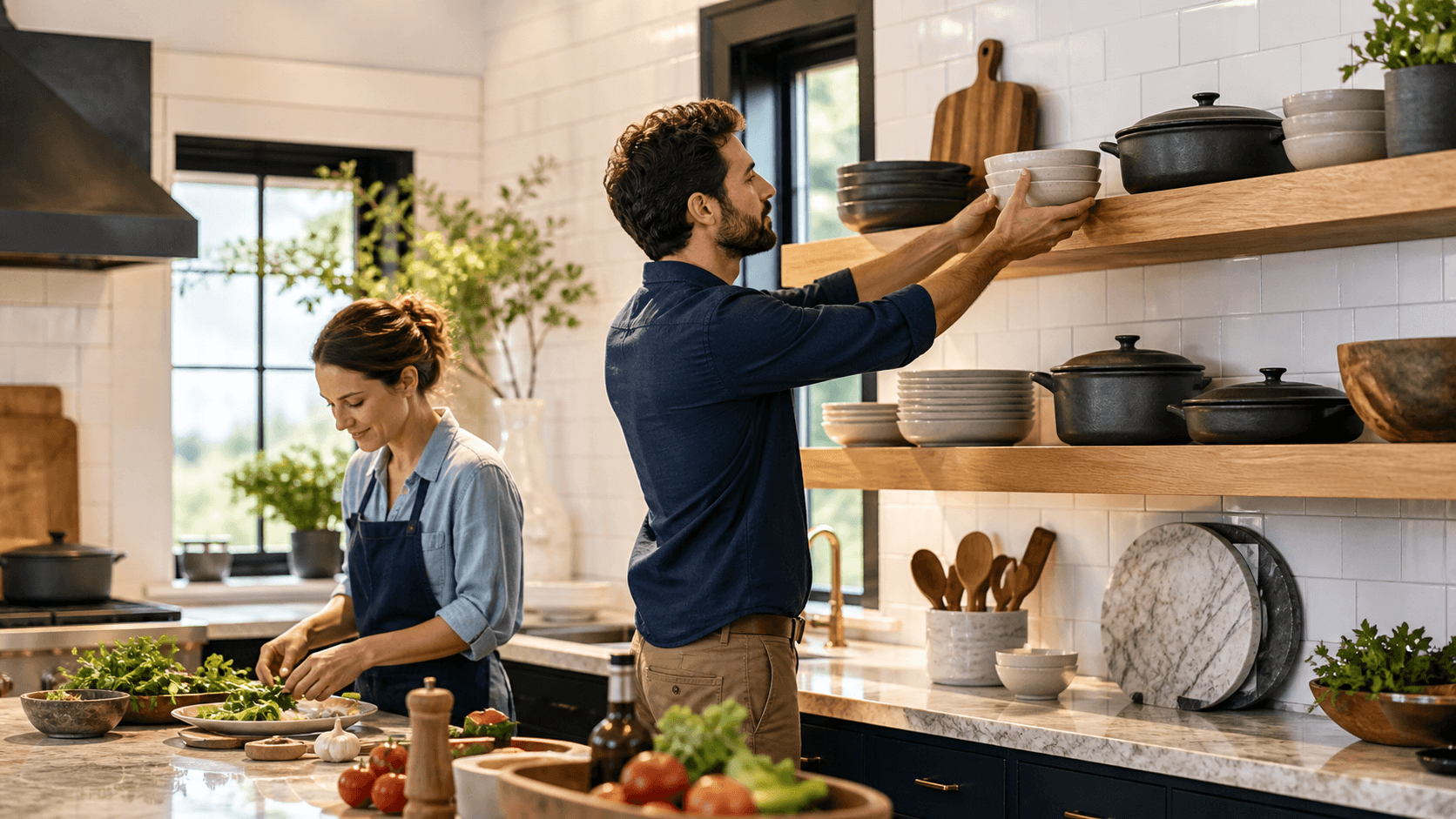
In open-concept spaces where the kitchen flows into the living area, slimmer, gallery-like depths help keep long sightlines clean. A slim run of white oak shelves that sit inside the plane of the counter can let your eye travel from kitchen to living room without stopping on a bulky block of wood.
Aligning Depth with Dishes, Décor, and Real Storage Needs
A simple measuring trick can save you a lot of regret. Take your largest dinner plate, biggest everyday bowl, and a serving platter. Trace those on paper and measure the depth. Then add a small buffer so the rims do not hang over the front of the shelf.
Think about what each shelf is really for:
- Display only: cookbooks, ceramics, art, small plants
- Light daily use: mugs, glasses, cereal bowls
- Cabinet replacement: full stacks of plates, heavy stoneware, cookware
Display shelves can be quite slim and still feel generous. Storage shelves that stand in for cabinets usually need more depth but not as much as some people think. When depth grows "just in case," it often invites clutter. Piles build up, the wall feels bulky, and the clean, modern line you were after disappears.
We tend to land in in-between sizes for custom projects. A 9 and a quarter inch shelf might be perfect for your dinner plate. A 10 and a half inch depth might tuck an espresso machine neatly against the wall, with the front flush to the edge.
Seasonal life matters too. Late summer often means gatherings on the patio, big salads, pitchers, and extra glassware. It makes sense to think ahead to the holidays now. If your shelves can hold those larger platters and stacks without stress, you are set for busy seasons without rethinking the layout.
Why Strength, Brackets, and Wood Choices Define What Works
Depth is not only a design question. It is a strength question. The deeper the shelf, the more leverage it places on the wall. This is why flimsy, lightweight brackets so often sag or tilt over time, especially when someone stacks cookbooks or heavy plates.
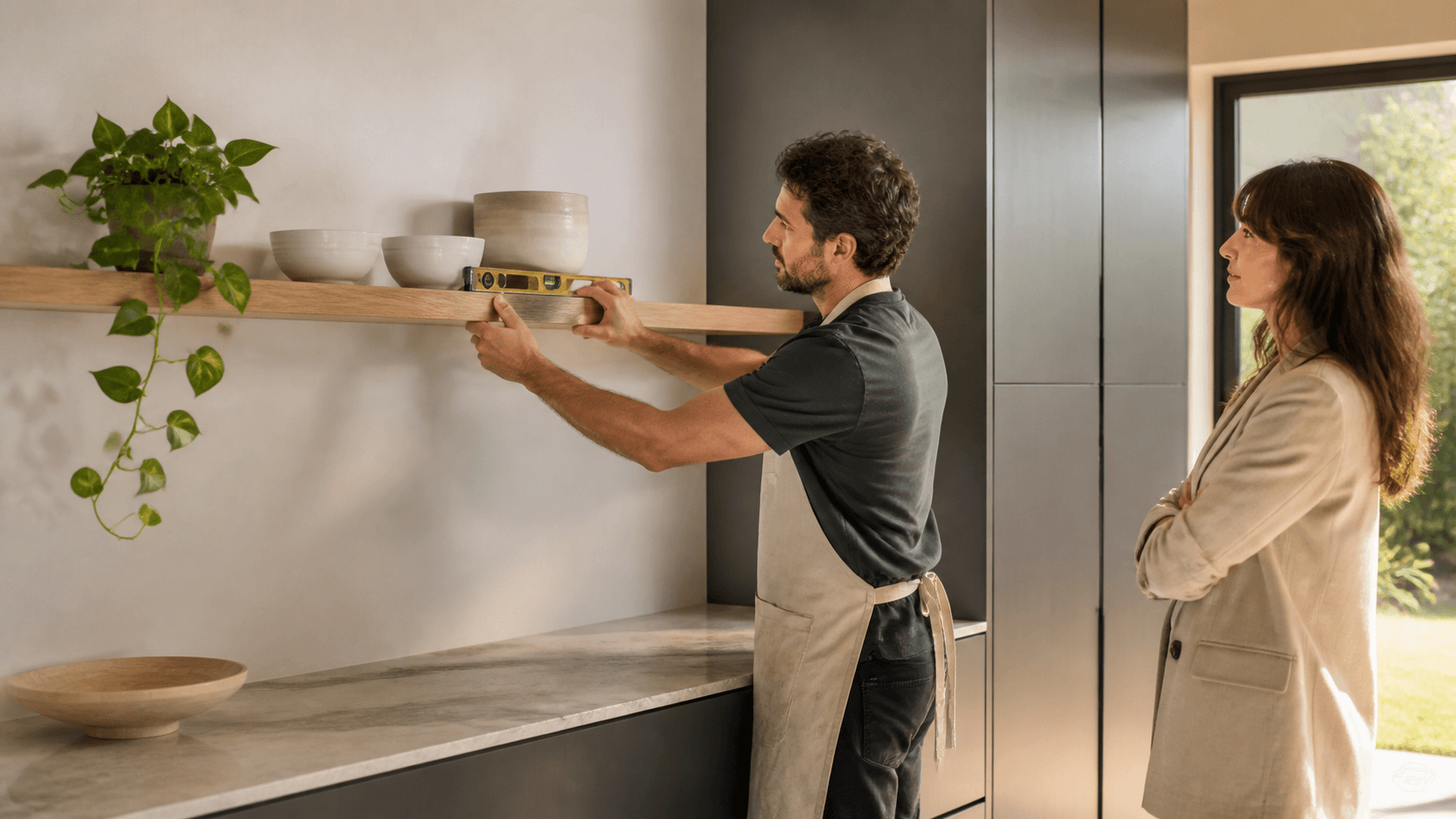
At The Mortise & The Hare, every floating shelf we craft is built around the Hovr Bracket System. It is a male and female interlocking bracket. The male piece mounts securely to the wall. The female piece is embedded into the solid hardwood shelf. Once they slide together, a set screw locks the connection so the shelf behaves like part of the wall.
The Hovr Classic bracket at 8-inch depth has an average load capacity around 300 pounds, roughly 13 times stronger than standard brackets. That level of strength means a properly installed custom-depth wall shelf can safely hold heavy dinnerware, stacks of cookbooks, or even cast iron in a busy family kitchen without sagging or creeping forward. It also keeps the back of the shelf tight to the wall so that crisp line where wood meets tile stays clean.
Because Hovr allows secure stud installation anywhere along the run, we are not fighting awkward stud placement. We can choose the best depth, thickness, and span for the wall, then build the solid hardwood shelf to match.
Wood choices then finish the picture. On deeper shelves, we may pair the depth with slightly thicker stock or shorter spans so the shelf stays stiff but still looks refined, not blocky. White oak can run long and lean and feel light, especially with a natural finish that reflects light. Walnut reads as a strong horizontal band, which can be beautiful when you want a clear, dark line across the wall. Darker finishes tend to visually "step forward," so in those cases we sometimes pull the depth back just a bit to keep the room feeling calm.
In the end, a seamless, built-in look comes from stacking all these choices in the right order. Start with how you use each wall. Map the sightlines that matter when you walk into the room. Measure the real objects that will live on the shelf. Then match depth, wood, and the Hovr hardware so your custom-depth wall shelf feels like it has always belonged there.
Get Started With Your Project Today
Bring your vision to life with a handcrafted custom-depth wall shelf designed to fit your space perfectly. At The Mortise & The Hare, we'll help you choose the right dimensions, wood species, and finish so your shelving looks and functions exactly how you need it to. If you have questions or want guidance before ordering, simply contact us and we'll walk you through every step.